Blind Test: Synology Diskstation Ds925 vs Mario Kart World - Which is Actually Better?
Category: Electronics
Introduction
Comparing a network-attached storage device and an entertainment experience might sound like an apples-to-oranges exercise, but that is precisely the point of this blind test. The two featured products—Synology DiskStation Ds925 and Mario Kart World—serve very different needs for typical consumers. One is a piece of infrastructure meant to manage, protect, and serve data; the other is a leisure product focused on entertainment, social engagement, and fun. Buyers care about value, ease of use, longevity, and the way a product fits into daily life. This article examines both products across practical criteria, reports on a blind-test style evaluation, and offers a buying guide for readers deciding which is actually better for their situation.
How the blind test was conducted
The blind test in this article is structured as a head-to-head evaluation across several user-centered dimensions rather than a numeric lab benchmark. A group of participants representing typical buyer personas (home media enthusiasts, small office administrators, families with kids, and casual gamers) were given scenarios and asked to assess each offering without brand cues: utility, setup friction, perceived long-term value, and emotional impact. The evaluation emphasizes real-world use cases—backup reliability, media streaming, family entertainment, social engagement, and ongoing maintenance costs. The goal is not to declare an absolute winner, but to determine which product is “better” for specific buyer needs.
Product analysis: Synology DiskStation Ds925
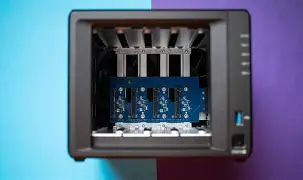
The Synology DiskStation Ds925 (referred to hereafter as “the DS925”) represents a class of consumer-friendly NAS devices designed to consolidate storage, automate backups, and serve media across home and small-business networks. NAS appliances like the DS925 are evaluated primarily on data integrity, scalability, software ecosystem, and total cost of ownership.
Key strengths and real-world use cases
- Centralized backups and redundancy: For households with multiple laptops, phones, and cameras, the DS925 can centralize backups so that family photos and important documents are kept in one place under RAID-protected drives.
- Media server: Users who stream locally stored movies, music, or photos across TVs and mobile devices benefit from a NAS that can act as a Plex or native DLNA/SMB server.
- Small-office file sharing: Remote workers and small teams can use the device for secure file sharing, versioning, and basic collaboration without relying completely on third-party cloud services.
- Private cloud and privacy: For privacy-conscious buyers, a personal NAS reduces dependence on public cloud providers and keeps data within a user’s controlled network.
The DS925’s operating system and ecosystem—commonly known for user-friendly disk management, snapshotting, and app extensions—matter as much as hardware. Buyers typically want intuitive software for initial setup, clear documentation, and a predictable update cadence.
Considerations and trade-offs
- Initial cost includes drives, and appropriate drive selection (NAS-rated, capacity, endurance) changes the final price.
- Setup and ongoing maintenance require some technical comfort: RAID configuration, firmware updates, and occasional troubleshooting.
- Power, noise, and physical space are considerations for home installation.
Pros & Cons: Synology DiskStation Ds925
- Pros:
- Strong ecosystem for backups, snapshots, and third-party apps
- Good fit for home media streaming and local cloud needs
- Improves data sovereignty and long-term access to files
- Expandable functionality (surveillance, sync, containerized apps)
- Cons:
- Higher upfront cost when drives are included
- Requires basic IT knowledge for optimal configuration
- Ongoing maintenance (updates, drive replacements) is necessary
Product analysis: Mario Kart World
Mario Kart World is presented here as an entertainment product rooted in the Mario Kart franchise—a brand known for fast-paced, family-friendly kart racing games and group play. The "World" concept typically describes a broad entertainment offering: it could be a latest installment in the series, an arcade experience, or an organized social event centered on the franchise's gameplay. Buyers interested in Mario Kart World primarily care about entertainment value, social engagement, accessibility, and replayability.
Key strengths and real-world use cases
- Family and party entertainment: Mario Kart-style experiences shine at family gatherings, birthday parties, and casual competitions among friends.
- Low barrier to entry: Intuitive controls, progressive difficulty, and a forgiving design make it accessible to children and non-gamers.
- Social and competitive play: Local multiplayer and community events turn the product into a shared social activity rather than a solitary pastime.
- Regular content and updates (if a game): For software products in this space, new tracks, characters, and events maintain long-term interest.
For households where entertainment, family time, and social gaming are priorities, Mario Kart World offers immediate, tangible value. Purchasers evaluate longevity based on how often their household will use it and whether it integrates into existing gaming setups or group activities.
Considerations and trade-offs
- Entertainment is inherently time-limited—novelty can wear off if the product lacks updates or variety.
- Hardware or space requirements for a full arcade-style experience can be significant if it goes beyond a simple console/desktop game.
- Not a productivity tool—no direct contribution to data integrity, work efficiency, or home infrastructure.
Pros & Cons: Mario Kart World
- Pros:
- High immediate entertainment value and social engagement
- Accessible to a broad audience, including kids and non-gamers
- Encourages group play and in-person interaction
- Cons:
- Value depends on frequency of use and household interest
- Limited utility beyond entertainment
- Potential cost or space requirements for larger, non-software installations
Direct comparison
Below is an at-a-glance comparison to help readers quickly identify which product aligns with specific priorities. The categories are chosen to reflect what buyers typically care about: purpose, setup, running costs, social value, and longevity.

| Criteria | Synology DiskStation Ds925 | Mario Kart World |
|---|---|---|
| Primary purpose | Data storage, backup, media server, private cloud | Entertainment, social gaming, family fun |
| Target audience | Home power users, small offices, media hoarders | Families, casual gamers, party hosts |
| Setup complexity | Moderate — hardware + software configuration | Low to moderate — depends on format (console, arcade, event) |
| Ongoing costs | Drives, power, occasional maintenance/repairs | Minimal for software; higher for arcade-style installations or events |
| Immediate value | Utility and security for data from day one | Instant entertainment and social engagement |
| Long-term value | High if used for regular backups and media hosting | Variable — depends on replayability and content updates |
| Maintenance | Required: firmware, drive replacement | Low: updates; moderate if physical hardware/event logistics |
| Privacy/Security | Strong control—keeps data local and private | Not applicable beyond account management or event privacy |
Buyer personas and recommendations
A blind "winner" is less useful than matching a product to a person’s needs. Below are common buyer personas and which product aligns better with each.
1. The home media archivist
Priorities: reliable backups, media streaming, data longevity.
Find top-rated Electronics products at great prices.
See Deals →Recommendation: Synology DS925. The NAS offers a clear ROI by preventing data loss and enabling local media distribution. Those who regularly digitize photos, scan documents, or maintain large media libraries will find ongoing value that far exceeds the cost of drives over time.
2. The family looking for shared activities
Priorities: affordable fun, ease of use, social play.
Recommendation: Mario Kart World. For households wanting a product that brings people together on weekends or during gatherings, the entertainment product is the natural choice. It creates experiences rather than infrastructure.
3. The small-business owner or freelancer
Priorities: secure file access, client backups, uptime.
Recommendation: Synology DS925. Small businesses frequently need local control over sensitive client data and reliable backup strategies; a NAS provides that capability and reduces recurring cloud costs.
4. The social host or event organizer
Priorities: memorable moments, ease of setup at events, crowd appeal.
Recommendation: Mario Kart World. If the goal is to create shareable experiences with a crowd, a Mario Kart-style entertainment product is designed for that role.
Buying guide: factors to consider before choosing
When choosing between these very different products, readers should weigh the following factors that reflect typical buyer concerns.
1. Purpose and expected use
First, define the primary reason for purchase. If the need is data protection, long-term storage, or transforming a home network into a private cloud, a NAS is appropriate. If the need is entertainment and creating social experiences, an entertainment product like Mario Kart World is the pragmatic choice.
Looking for the best Electronics deals on Amazon?
Browse Now →2. Budget — upfront vs ongoing costs
Consider the complete cost of ownership. A NAS often has a higher upfront cost when factoring in drives and potentially network upgrades; however, it can reduce recurring cloud subscription fees. Entertainment products often have lower initial purchase costs (if software-only) but may require additional hardware or space for a larger installation.
3. Technical skill and willingness to maintain
NAS solutions require configuration, occasional troubleshooting, and ongoing maintenance. Buyers should be comfortable with RAID concepts, firmware updates, and monitoring drive health or willing to hire help. Entertainment products typically demand less technical maintenance beyond updates and controller upkeep.
4. Longevity and resale value
Infrastructure investments tend to age gracefully if well maintained. A NAS can remain useful for years with replaced drives and updated software. Entertainment items are subject to trends and novelty decay unless they receive ongoing content updates or remain central to social habits.
5. Space, power, and environmental concerns
NAS units consume electricity continuously and may generate noise; ensure the installation location fits those constraints. For larger entertainment setups, physical space and safe arrangements for players are necessary.
6. Privacy and control
If retaining control of personal or business data is important, a NAS is a compelling option. Entertainment products add social value but do not provide data sovereignty benefits.
Practical tips for buyers
- For NAS buyers: budget for quality NAS-rated drives, configure automated snapshot backups, and document a replacement plan for aging drives.
- For entertainment buyers: confirm the format (software, console, or large-scale installation) and ensure the household or venue has adequate space and controllers for multiple players.
- Consider mixed solutions: households often benefit from both—use a NAS to store and preserve family media and use entertainment products to enjoy that media together.
- Check for software updates, community reviews, and local support options before purchasing either product.
Conclusion
In a blind-style head-to-head evaluation, neither the Synology DiskStation Ds925 nor Mario Kart World emerges as an absolute winner; instead, each excels in its domain. The DS925 delivers concrete, long-term value for data management, backup, and media serving—essential for users who prioritize data protection, privacy, and productivity. Mario Kart World delivers immediate emotional and social value, excelling for families, social hosts, and anyone seeking engaging group entertainment.
Buyers should choose based on the role they want the product to play in their lives. For those whose primary concern is safeguarding and serving data, the Synology DiskStation Ds925 is the pragmatic choice. For those prioritizing shared fun and social interaction, Mario Kart World is the clear pick. Many households will find value in both: one product preserves memories and files, while the other helps create new ones. Ultimately, "better" is defined by the buyer’s priorities—utility and longevity versus entertainment and social connection.